
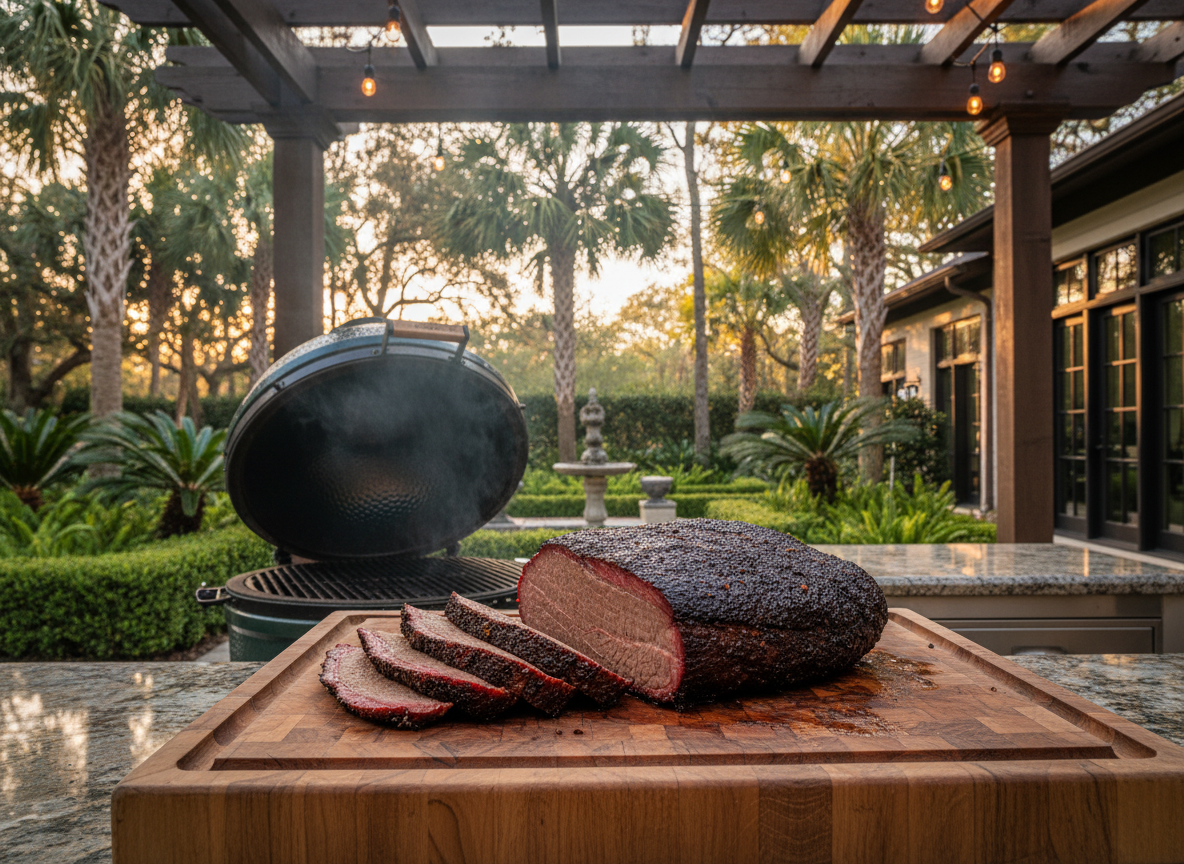
A 12-hour smoke is a commitment – but the result is something transcendent. Here’s everything you need to know to pull off a perfect brisket on your Egg, from rub to rest.
The 12-Hour Ritual That Defines Outdoor Cooking
A 12-hour smoke isn’t just a cooking method – it’s a commitment. You’re tending a fire, monitoring temperature, watching transformation happen in real time. But when you pull that brisket off the Big Green Egg and slice into a perfectly rendered flat with a mahogany bark that shatters under your knife, you understand why pitmasters have been doing this for generations.
The Big Green Egg is built for this. Its ceramic body holds steady heat for 12–16 hours on a single load of charcoal, creating the low-and-slow environment that turns a tough cut of beef into something transcendent. No babysitting. No temperature swings. Just time, heat, and the kind of results that make people remember your name.
This guide walks you through everything – from selecting the right brisket to the non-negotiable rest that makes the difference between good and unforgettable. Whether you’re a first-timer or refining your technique, the principles here will help you pull off a brisket that tastes like it came from a legendary smokehouse.
Why the Big Green Egg Is Perfect for Brisket
Brisket demands two things: consistent low temperature over a very long time, and moisture retention. The Big Green Egg’s ceramic construction delivers both better than any other backyard cooker. Once dialed in at 225°F, the Egg will hold that temperature for 12–16 hours on a single load of lump charcoal – no babysitting required.
The ceramic also creates a convective cooking environment that circulates heat evenly around the meat, eliminating hot spots. The result is a brisket with a deep, mahogany bark on the outside and a perfectly rendered, pull-apart interior.
Choosing Your Brisket
Start with a whole packer brisket – both the flat and the point, connected. Look for USDA Prime or Choice grade, with good fat marbling throughout. A 12–14 lb brisket is ideal for the Egg and will feed 10–12 people.
Trim the fat cap to approximately ¼ inch. Too much fat and it won’t render properly; too little and you lose the moisture barrier that protects the meat during the long cook.
The Rub
Texas-style simplicity wins here. Mix equal parts coarse kosher salt and coarsely ground black pepper – that’s it. Some add a touch of garlic powder or smoked paprika, but the beef should be the star. Apply generously on all surfaces and let the brisket sit uncovered in the refrigerator overnight.
Setting Up the Egg
Use the convEGGtor (plate setter) for indirect cooking. Fill the firebox with quality lump charcoal – natural hardwood lump, not briquettes. Add 3–4 chunks of post oak or hickory wood for smoke flavor. Light the Egg and stabilize at 225°F before adding the meat. This process takes 20–30 minutes and is worth the patience.
The Cook
Place the brisket fat-side up on the cooking grate. Insert a leave-in thermometer probe into the thickest part of the flat. Close the Egg and resist the urge to open it frequently – every peek adds time.
The stall. Around 160–170°F internal temperature, the brisket will plateau – sometimes for several hours. This is normal. Moisture evaporating from the surface is cooling the meat at the same rate the heat is cooking it. Do not panic. Do not raise the temperature.
The wrap. When the brisket hits 165°F, wrap it tightly in butcher paper (not foil – paper allows the bark to breathe while retaining moisture). Return to the Egg and continue cooking.
The finish. The brisket is done when a probe slides into the thickest part of the flat with no resistance – like inserting it into warm butter. This typically happens around 200–205°F internal temperature, though temperature is less important than feel.
The Rest: Non-Negotiable
Remove the brisket from the Egg, still wrapped, and rest it in a dry cooler for a minimum of 1 hour – 2 hours is better. This step is not optional. The rest allows the muscle fibers to relax and reabsorb the juices that have been driven to the center during cooking. A properly rested brisket is dramatically juicier than one sliced immediately.
Slicing
Slice against the grain – always. The flat and point run in different directions, so you’ll need to reorient your knife partway through. Slices should be approximately ¼ inch thick – thin enough to be tender, thick enough to hold together. Serve immediately.
For a beautiful presentation, arrange the sliced brisket directly on a Smithey Ironware cast iron skillet – the hand-polished surface retains heat beautifully and takes the whole spread from the cutting board straight to the table with the kind of drama this cook deserves.
The Timeline
- Night before: Trim and apply rub. Refrigerate uncovered.
- 5:00 AM: Light the Egg, stabilize at 225°F.
- 6:00 AM: Brisket goes on.
- ~2:00 PM: Wrap at 165°F internal.
- ~5:00–6:00 PM: Pull at probe-tender (200–205°F).
- ~7:00 PM: Rest complete. Slice and serve.
Products Featured in This Article
Experience the Big Green Egg in Person
Visit our showroom for a hands-on demo. We'll help you choose the right Egg size and accessories for the way you cook.
Book a Grill Demo