
Salt air, intense UV, and high humidity are relentless on outdoor furniture. Here's what to look for in materials, finishes, and construction – so your investment stays beautiful for years.
The Lowcountry Is Hard on Furniture
Hilton Head Island and the surrounding Lowcountry present a specific set of challenges for outdoor furniture that most manufacturers don't design for. The combination of salt air, high humidity, intense UV radiation, and frequent rain creates conditions that will quickly degrade furniture not built to handle them.
We've seen it countless times: a homeowner buys beautiful furniture from a big-box retailer, and within two seasons it's faded, rusted, or structurally compromised. The lesson isn't to spend more – it's to spend wisely on materials engineered for coastal conditions.
Material Guide: What Works and What Doesn't
Poly Lumber – Our Top Recommendation for Coastal Durability
Poly lumber is made from recycled high-density polyethylene (HDPE) plastic, and it's the most durable material available for coastal outdoor furniture. It will not rot, splinter, crack, or absorb moisture. It's UV-stabilized to resist fading. It requires virtually no maintenance beyond an occasional rinse. And it's available in a wide range of colors that stay vibrant for years.
Berlin Gardens builds their entire collection from poly lumber and hardwood, handcrafted by Amish builders in Ohio. The quality of construction is exceptional – these are pieces built to last decades, not seasons.
All-Weather Wicker – Elegant and Coastal-Ready
Natural rattan wicker is beautiful but completely unsuitable for outdoor use in the Lowcountry – it will deteriorate rapidly in humidity and rain. All-weather wicker, however, is a different material entirely: a synthetic resin fiber woven over an aluminum frame, engineered to resist UV, moisture, and salt air.
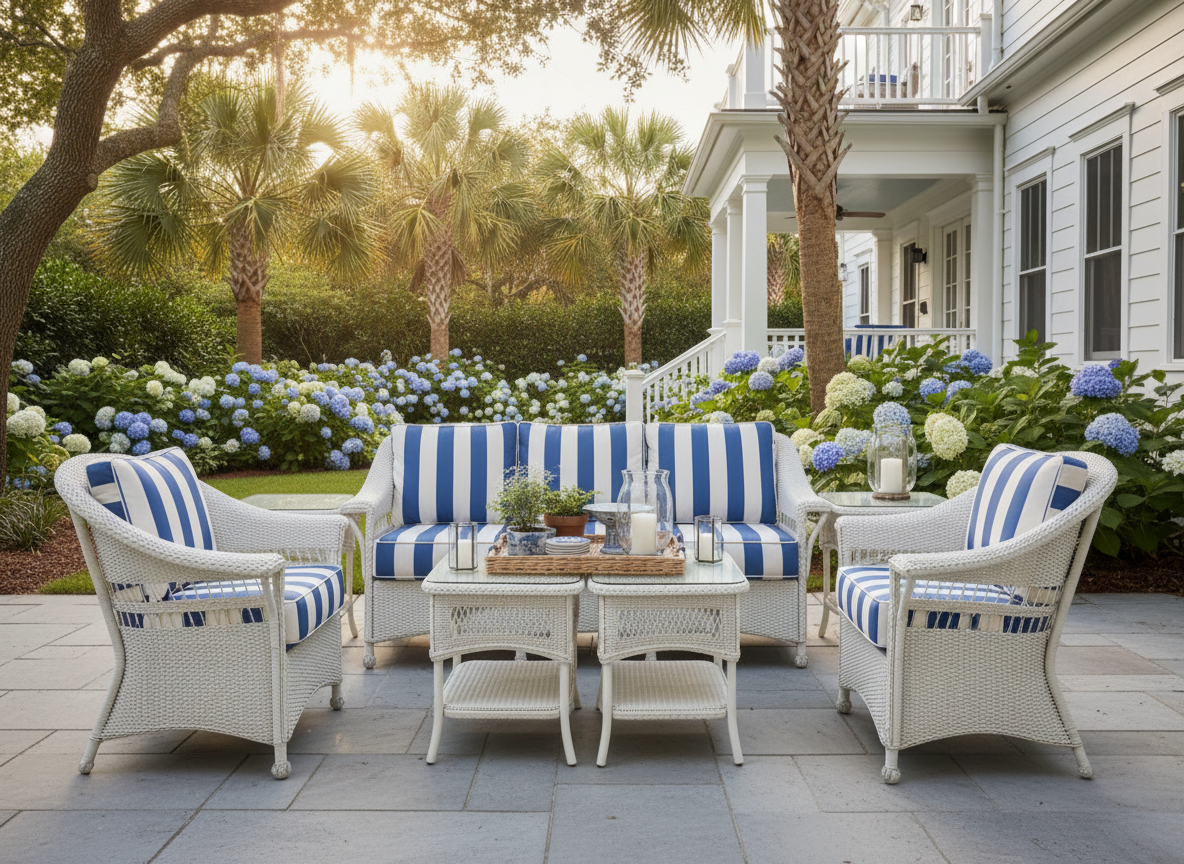
Lloyd Flanders has been perfecting all-weather wicker for over a century. Their proprietary woven fiber resists fading, staining, and stretching – and the aluminum frames won't rust. The result is furniture with the refined, coastal elegance of wicker and the durability to back it up.
Aluminum – Lightweight, Rust-Proof, Versatile
Powder-coated aluminum is an excellent choice for coastal environments. It's inherently rust-proof (unlike steel), lightweight enough to rearrange easily, and available in a wide range of finishes. The key is quality powder coating – thin or improperly applied coatings will chip and allow oxidation over time.
O.W. Lee and Telescope Casual both use high-quality aluminum frames with multi-step powder coating processes that are specifically designed for durability in demanding environments.
Wrought Iron – Beautiful but Requires Attention
Wrought iron is heavy, substantial, and undeniably beautiful. In coastal environments, it requires more maintenance than aluminum – any chips or scratches in the finish need to be addressed promptly to prevent rust. O.W. Lee's wrought iron pieces are finished with a multi-step process that provides excellent protection, but they do require periodic inspection and touch-up in a salt air environment.
What to Avoid
Untreated wood (including teak, unless properly maintained), standard steel, natural rattan, and low-grade powder-coated aluminum are all poor choices for Lowcountry outdoor use. They may look beautiful in a showroom but will struggle in our environment.
Cushions and Fabrics
Even the best frame is only as good as its cushions. In the Lowcountry, look for fabrics made from solution-dyed acrylic – Sunbrella is the industry standard. Solution-dyed means the color goes all the way through the fiber, not just on the surface, making it far more resistant to fading. It's also mold and mildew resistant, which matters enormously in our humid climate.
Quick-dry foam inserts are worth the investment – they allow cushions to dry rapidly after rain rather than staying wet for days and developing mildew.
The Investment Perspective
Premium outdoor furniture from brands like Berlin Gardens, Lloyd Flanders, O.W. Lee, and Telescope Casual costs more upfront than mass-market alternatives. But the math is straightforward: a $3,000 set that lasts 20 years costs $150 per year. A $1,200 set that needs replacing every 3–4 years costs $300–400 per year – and involves the hassle and waste of repeated replacement.
Buy once, buy right. In the Lowcountry, that means buying furniture engineered for coastal conditions, from manufacturers who stand behind their products.
Getting It Right for Your Space
The best material choice depends on your specific situation: covered or uncovered, full sun or shade, proximity to the water, how much maintenance you're willing to do, and the aesthetic you're going for. This is exactly the kind of guidance we provide at Terrace + Tide – and it's why we think a consultation before you buy is worth your time.
Brands Featured in This Article
Get Expert Guidance for Your Space
Our team will help you choose the right materials and brands for your specific Lowcountry conditions. Complimentary consultations, in-showroom or virtual.
Schedule a Consultation