
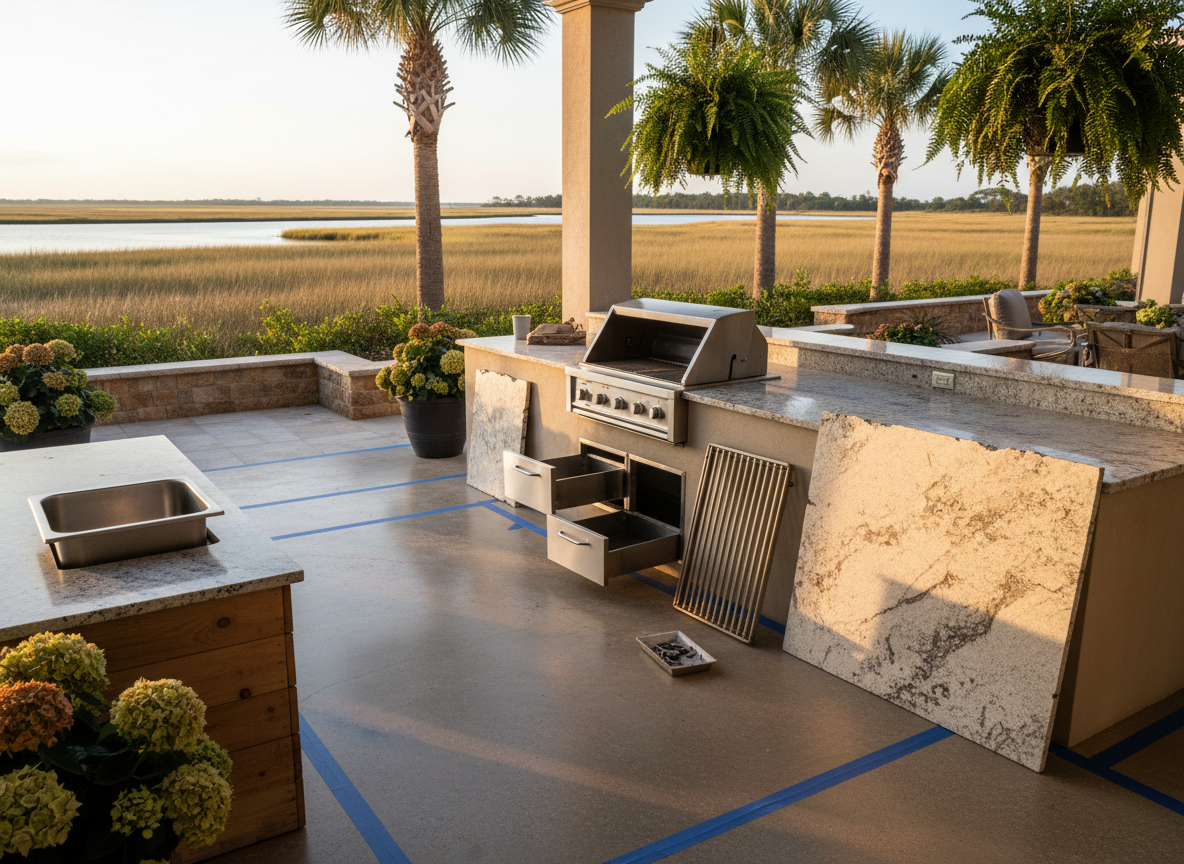
An outdoor kitchen is one of the most rewarding investments you can make in your home. It's also one where the decisions you make before construction begins will shape everything that follows – for better or worse.
The homeowners who end up happiest with their outdoor kitchens are the ones who thought carefully upfront. Not because they had all the answers, but because they asked the right questions. This guide walks you through the decisions that matter most – so you can build once, build right, and enjoy it for years to come.
Start with How You Actually Cook and Entertain
Before you think about appliances or materials, think about behavior. How do you use your outdoor space today? How do you want to use it?
A homeowner who grills steaks a few times a week has different needs than one who hosts large dinner parties, smokes brisket on weekends, or wants a full bar setup for summer entertaining. The answers to these questions will drive almost every decision that follows.
- How often do you cook outdoors? Casual weekend griller vs. serious daily cook changes the equipment calculus significantly.
- How many people do you typically entertain? Intimate dinners for six require different counter space and seating than parties of twenty.
- Do you want a bar area? A sink, refrigerator, and ice maker add complexity but dramatically improve the hosting experience.
- Will you use this year-round? In the Lowcountry, the answer is often yes – which affects material choices and the value of covered vs. uncovered configurations.
Decide on Your Primary Cooking Method First
Your grill or cooker is the centerpiece of the outdoor kitchen. Everything else is built around it. So this decision comes first.
Built-In Gas Grill
The most common choice for outdoor kitchens. Gas grills like Delta Heat and Napoleon offer convenience, quick startup, and precise temperature control across multiple zones. They integrate cleanly into countertop installations and are ideal for homeowners who want reliable performance for everyday cooking.
Kamado Cooker (Big Green Egg)
If versatility is your priority – grilling, smoking, baking, roasting – a kamado is hard to beat. The Big Green Egg can be built into a dedicated table or island with a custom cutout. It requires more planning than a standard built-in, but the cooking range is unmatched.
Combination Setups
Many serious outdoor cooks opt for both: a built-in gas grill for everyday convenience and a kamado for weekend projects. If your space and budget allow, this combination gives you maximum flexibility.
Think Through Your Layout Before Anything Else
Layout is where most outdoor kitchen mistakes happen. The most common error: designing around the appliances rather than around how people will actually move through the space.
A few principles that hold up across almost every project:
- The work triangle still applies outdoors. Grill, prep surface, and refrigerator/sink should be within easy reach of each other – not spread across opposite ends of the kitchen.
- Counter space is almost always underestimated. You need room to prep, plate, and set down tools. Plan for more than you think you'll need.
- Consider traffic flow. Where will guests congregate? You don't want them crowding the cook. A bar counter on the opposite side of the island creates a natural separation.
- Think about the view. Where will the cook be facing? Toward the marsh, the pool, the guests? This matters more than people expect.
Covered or Uncovered?
In the Lowcountry, this is one of the most important decisions you'll make. A covered outdoor kitchen dramatically extends usability – through summer rain, intense afternoon sun, and cooler evenings.
A pergola, solid roof extension, or screened enclosure each has different implications for cost, airflow, and how the space feels. If you're building new, it's almost always worth incorporating a cover from the start. Retrofitting one later is significantly more expensive.
If you're going uncovered, material selection becomes even more critical. Everything – countertops, cabinetry, appliances – needs to be specified for full outdoor exposure.
Choose Materials That Can Handle the Lowcountry
Salt air, UV, humidity, and heat are relentless. Materials that look beautiful in a showroom can fail quickly in coastal conditions if they're not specified correctly.
Cabinetry and Structure
Aluminum-framed cabinetry is the gold standard for coastal outdoor kitchens. It won't rust, rot, or warp. Brands like Challenger Outdoor Kitchens build their Coastal Series specifically for this environment – pre-designed, fully assembled, and ready to use.
Concrete block with stucco is a popular alternative for fully custom builds. It's durable and can be finished to match your home's architecture, but it requires professional installation and proper waterproofing.
Countertops
Granite and porcelain tile are the most common choices for outdoor kitchens in coastal climates. Both handle heat, UV, and moisture well. Concrete countertops can be beautiful but require sealing and maintenance. Avoid materials like marble or unsealed natural stone – they stain and etch outdoors.
Appliances
Specify outdoor-rated appliances only. Indoor appliances are not built for outdoor temperature swings, UV exposure, or moisture. Look for 304 or 316 stainless steel – the higher the grade, the better the corrosion resistance in salt air environments.
Plan Your Utilities Early
Gas, electrical, water, and drainage all need to be planned before construction begins – not added as an afterthought. Retrofitting utilities into a finished outdoor kitchen is expensive and disruptive.
- Gas: Decide early whether you're running a natural gas line or using propane. Natural gas is more convenient for heavy users; propane is more flexible if a gas line isn't available.
- Electrical: Plan for outlets, lighting, and any appliances that require dedicated circuits (refrigerators, ice makers, blenders).
- Water: A sink with running water is a significant upgrade to the outdoor kitchen experience. Plan the supply line and drainage route before the countertop is set.
Set a Realistic Budget – and Understand Where the Value Is
Outdoor kitchen costs vary enormously based on size, materials, and appliance selection. A pre-designed aluminum island with a quality built-in grill can be a relatively accessible entry point. A fully custom stone kitchen with premium appliances, a pergola, and full utility connections is a major construction project.
Where the value concentrates: the grill and cooking equipment, the countertop, and the structure. These are the elements you interact with daily and that determine how the kitchen performs and holds up over time. Saving money on these to spend on decorative elements is usually the wrong trade-off.
Start with a Conversation, Not a Catalog
The best outdoor kitchens aren't designed by browsing products online and hoping they fit together. They're designed by starting with how you want to live, then working backward to the right configuration and products.
That's exactly the kind of guidance we provide at Terrace + Tide. Whether you're starting from scratch or refining an existing plan, we'll help you think through the decisions that matter – and connect you with the right products for your space, your cooking style, and the Lowcountry climate.
Products Featured in This Article
Plan Your Outdoor Kitchen with Expert Guidance
Visit our Hilton Head showroom to see outdoor kitchen options in person and get personalized guidance on layout, appliances, and materials for your space.
Schedule a Consultation